Every Day’s a Good Hair Day With lee

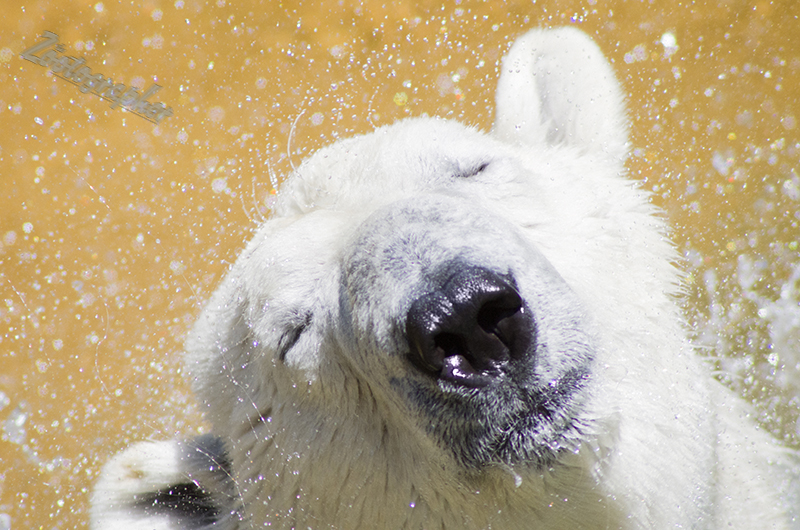
Polar Bear Lee at the Denver Zoo. 6/2/2018. Pentax k-50, Sigma 400/5.6

One of the Denver Zoo’s most senior animal care staff members is a dude named Jim. From what some of the volunteers tell me, his hobbies outside of bears include Monty Python references and dad jokes. What I know is that if I see Jim walking around the zoo, I follow where he’s going; something good is about to happen.

On this particular day, I caught Jim walking over to the Northern Shores with a bucket full of romaine lettuce. He was going to be doing a training demonstration with Lee, one of the two polar bears at the time.

I had just gotten my new zoo toy, a vintage k-mount Sigma 400mm lens, and was excited to get up close, and this proved the perfect opportunity. I took quite a few shots during the training demo, but this was the clear winner at the end of the day. Fresh from making a dive into his pool for a whole head of lettuce, Lee came out and shook himself off, giving me an idea for a new line of shampoo to keep polar bear fur sleek and healthy… or at least the advertising shot for when someone else comes up with that shampoo.

Lee is now over in the Columbus Zoo; I’m hoping to make a visit out to see him again. He and Cranbeary were separated as part of the SSP. While they were well-loved by Denver, they didn’t have the connection with each other that was needed to ensure long-term survival of the species. Cranbeary is up in Alaska. Both are doing well, but they sure are missed here in Denver.
Groucho

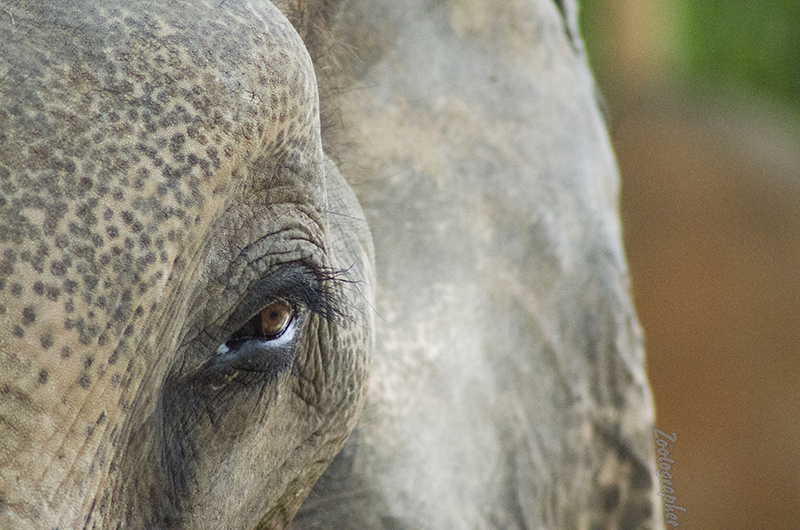
Denver Zoo’s Asian Elephant Groucho. 6/23/18. Pentax k-50, Sigma 400/5.6

Most zoos these days have some sort of behind the scenes experience. Denver Zoo calls them Up-Close Encounters. Of the 13 they offer, I’ve done nine at this point. They’re all good; they’re all absolutely worth doing. But there are two that I recommend above all others: The Flamingo encounter, and the Elephant encounter.

At the end of the behind the scenes tour and opportunity to hand-feed one of the boys, you’re taken to a spot in between two of the elephant yards. It’s a spot frequently used for training, so the boys know that if there are people there, they’ve got treats on the way. It’s an incredible opportunity to get really close to these guys.

One of the visitors was Groucho – the largest animal in Colorado. The first time I met Groucho, he destroyed an entire tree that was just outside his habitat because he felt like it. He eats 130 pounds of grass hay a day and will pound it down in one sitting if allowed to do so. But in this instance, he and I just got to look at each other.

Elephants are very difficult animals to take a good picture of at the zoo. With their size, you almost have to include the environment. And as much as I love the zoo, the zoo environment is not always the magical one you want for a picture. So with my 400mm lens (600mm effective length on the crop sensor Pentax k-50), I decided to get right up and personal with my magnificent friend. With that focal length at that relatively short distance, the background melted into a buttery field of green, and all the focus went right on to that beautiful eye and those incredible eyelashes.

The Cutest Little Dude in the Jungle

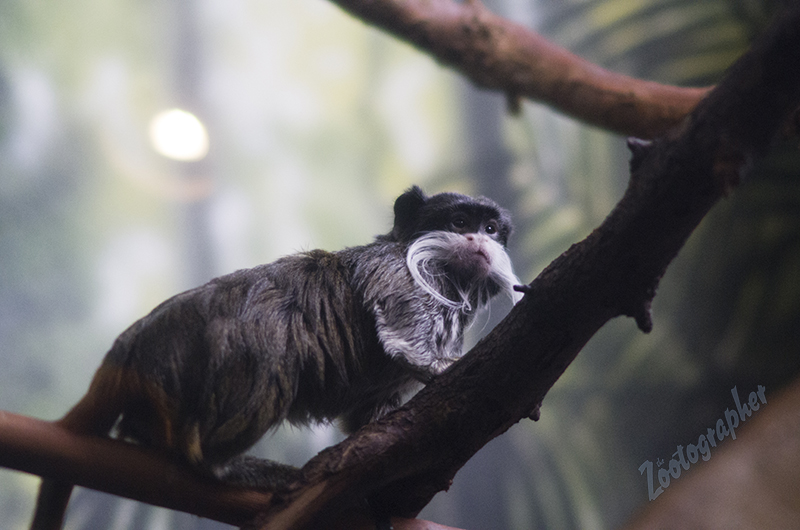
Bigode, Denver Zoo’s Emperor Tamarin. 10/4/2018. Pentax k-50, 50/1.4

If you pass through Denver Zoo’s Emerald Forest habitat, you’re bound to come upon this little guy. Likely, you’ll overhear other guests commenting on his adorable mustache. Isn’t he cute!?

Some of the things Denver Zoo volunteers get to help with are behavioral observations. When an animal gets a new roommate or is displaying stress or is in a mating process, it’s up to the volunteers to perform the scientific legwork in observing and documenting behaviors to make sure these guys are getting the best care possible.

I’ve done 20+ hours of observations with Bigode. Spending that much time hanging out with one animal, you can’t help but develop an affinity for them. I’ve got to pop in and see him at least once per visit. Even when not on duty, I’ll stop and watch how he’s interacting with his environment and his roommates. The other thing you can’t help but do is take pictures. I’ve got a lot of my little Emperor Tamarin, but this is one of my favorites.

Lil Bebe Lizard

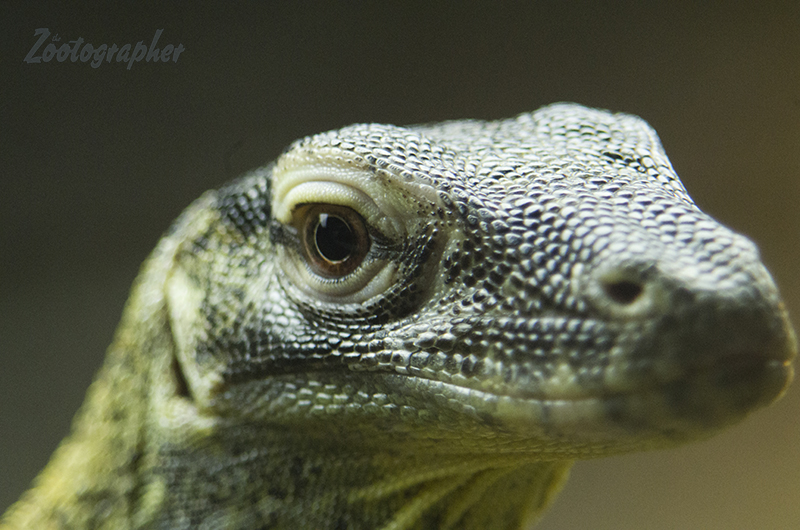
Baby Komodo Dragon at the Denver Zoo. 8/4/18. Pentax k-50, 35-105 Macro

Denver Zoo has had a lot of good luck in Komodo Dragon breeding. Last year, as an addition to their part of the Species Survival Plan, they got a trio of 9-month old babies from the Fort Worth Zoo.

They were a big draw; Komodo Dragons are one of those animals like Red Pandas that kids will just latch onto the instant they learn about them. I guess being a real-life dragon doesn’t hurt.

A Whimsie Snack

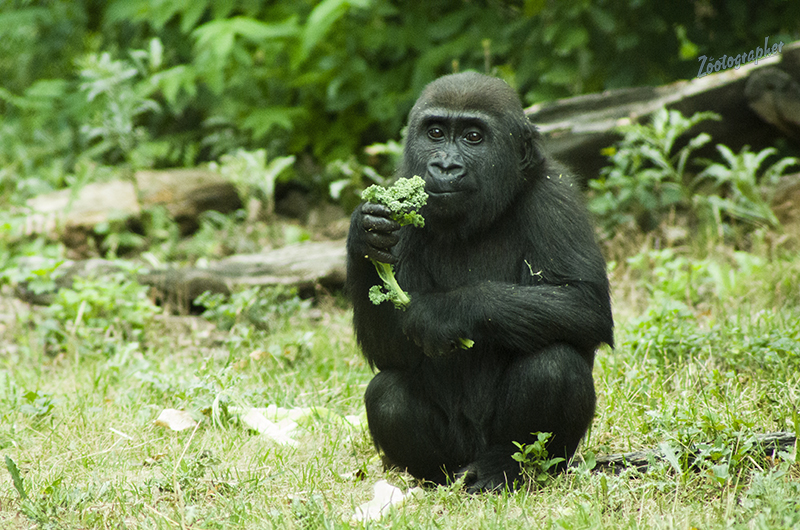
Denver Zoo’s Baby Gorilla Whimsy. 7/29/18. Pentax k-50, Sigma 400/5.6

Whimsie is about two and a half years old in this picture. Which – arguably – is well past the realm of baby. It’s just not hard to think of her as such, especially seeing her with big mama Tinga and giant dad Jim while they forage for some greens tactically placed by the care staff in the habitat for enrichment.

Exposing pictures of dark black animals is up there with wildlife shots in the snow in terms of difficulty and/or compromise. there’s no right way to do it. This grass was far greener in person, but exposing it properly put Whimsie too deep in the shadows for the dynamic range of the Pentax k-50’s sensor. I wanted the detail in the hair and the eyes, so that’s what I exposed for. Like I said, no right way. Just choices to be made.

I’d like to note that the Lowland Gorillas have the easiest to remember scientific name in the world: Gorilla gorilla gorilla. If they were buffalo, the name would be a full sentence.

Portraitkeet

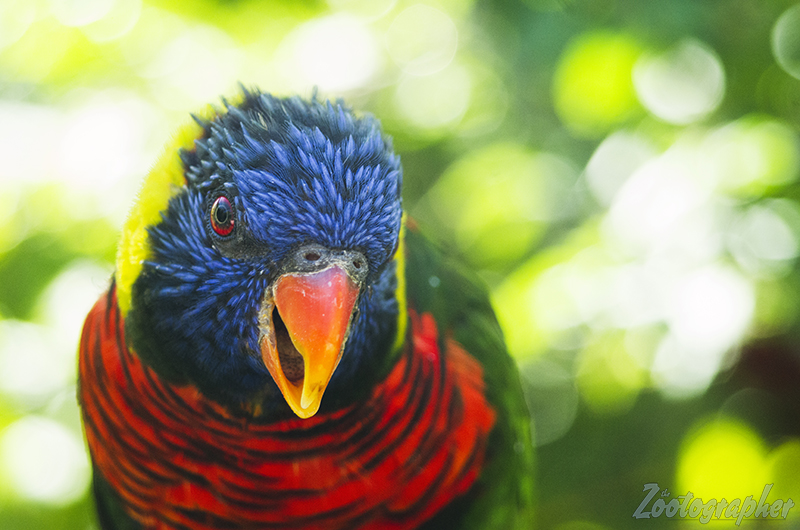
Denver Zoo Lorikeet. 10/13/18. Pentax k50, Pentax 35-105 macro

If you want to get close to some animals that are relatively comfortable with humans, your local zoo’s bird experience is one of your best options. Denver’s lorikeets are incredibly colorful and incredibly friendly, especially if you arrive around opening time when they’re the most excited to see you. This one for instance is actually perched on my finger just out of frame. Makes utilizing natural light really easy when I can just turn around until I find the best angle.

This Pentax lens (smcp-f 35-105) is a weird one. I honestly can’t recall when or where I got it. It’s not super fast, the zoom range is a little weird, and the minimum focus distance is atrocious… until you twist past 105mm and into its macro mode. Once you click over there and start focusing manually, it works some beautiful magic.

You may be wondering how one manually focuses with a lorikeet on their hand. If you ever find yourself in that situation, focus as tight as you can and move the camera and the subject back and forth until you see what you want to see. Much like working with a prime lens, your body becomes the control ring.

Dirty Windows and Orangutans

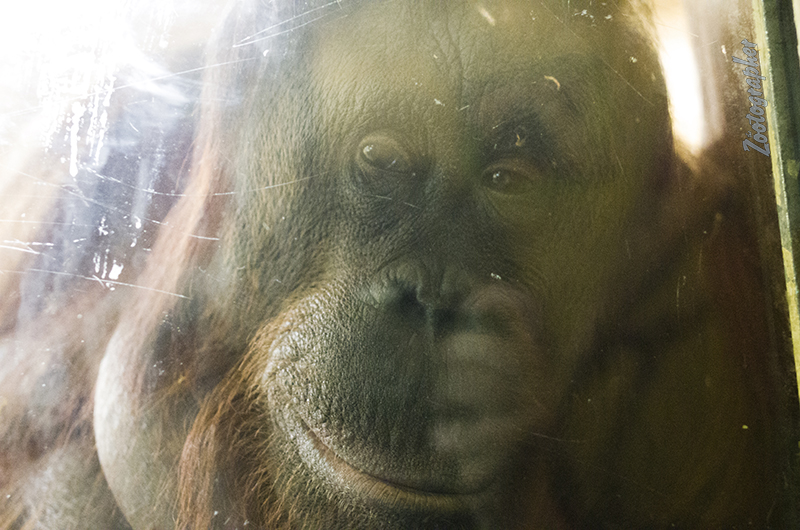
Cheyenne Mountain Zoo Sumatran Orangutan. 7/21/18. Pentax k-50, 35/2.4

Zoos are weird. I spend over 300 hours a year at zoos and they’re still weird. That fine line between conservation and exhibition, providing a better life and taking away wild freedom. it’s just… yeah. Weird.

Part of how I reconcile that with my zoo photos is attempting to make them not look like they were taken in a zoo. Whether it’s opening the aperture wide to mask a wire mesh, zooming in tight to hide enclosure elements, I want my zoo photos to look like animals in their natural habitats.

So what do I do when a Sumatran Orangutan has its face up against a filthy, scratched up window? Against the kind of glass I would put in the trash before I’d put it in front of my camera? Well, if that orangutan is staring into my soul and smiling, I take the damn picture anyway. No focus tricks are going to eliminate this window. Without a massive lens hood, I’m not going to get rid of that reflection of my hands. But I don’t care.

Part of the reason we walk that fine line at zoos is for connection. I can’t speak for Cheyenne, but Denver Zoo’s mission statement is to provide a better world for animals through human understanding. And it’s moments like this, feeling a deep connection to an animal that is so painfully close to human that it kind of hurts to see it through a window like this, that lead to that human understanding. That make you want to provide these animals, all animals, with a better future. And if I can show that in a photo, I don’t give a damn about reflections and scratched up glass.

Just Gourdeous

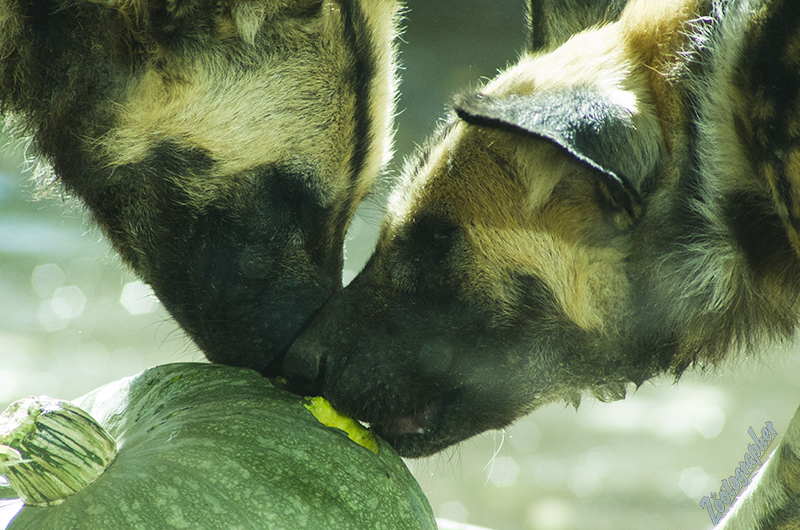
African Wild Dogs at the Denver Zoo. 10/5/18. Pentax k-50, Sigma 400/5.6

I couldn’t recreate this shot if I wanted to. There’s something magical about this light that all the analysis in the world isn’t going to break down. There are some stray focus-blurred reflections in the plexiglass between me and the puppies that work with the focus blurs in the background to create something special that you’d expect to be done with a photoshop filter.

All of that random natural lighting magic works perfectly with the seasonal enrichment gourd into which the pair of hyena are digging. All in all, it’s not one of those photos you go out trying to make; it’s one you find. I’m glad I found this one.

Denver Zoo Free Day

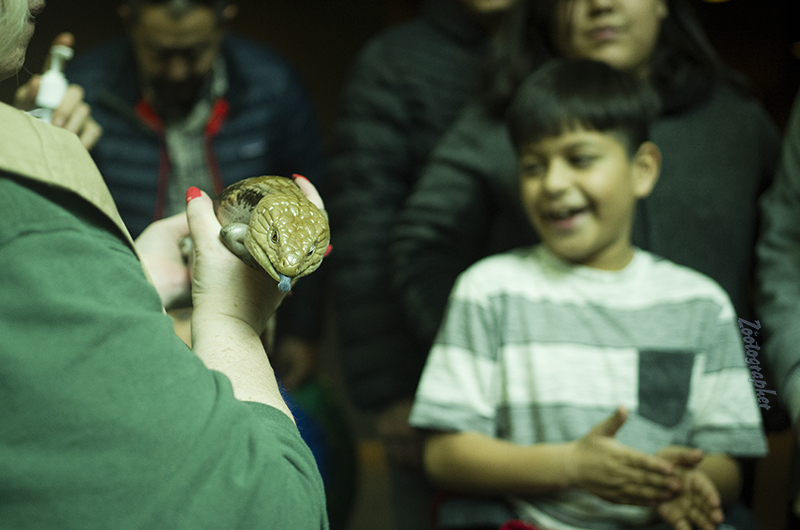
Guest enjoying an Australian Blue-Tongued Skink at Denver Zoo. 1/19/19. Pentax k-50, 35/2.4

One of my roles as a volunteer at the Denver Zoo is as a member of the Volunteer Photography Committee. Its main role is as a service providing images for the various stakeholders in the zoo. While a lot of it is your normal animal stuff, there’s also taking photos during special events. One of those events is Free Day.

There are various free days throughout the year, but they’re all there as a way for the zoo to say thanks to the community for their continued support, and to ensure that it remains accessible to everybody.

I don’t normally share photos of other people. Although technically it’s a public place and they’re consenting to photos being taken by being there, it can still feel a little weird. but this one from yesterday was just too good. This kid enjoying the crap out of the Blue-Tongued Skink who just happens to be showing off his name-sake. He’s got the kind of emotion that you simply can’t fake on camera, and the skink is… well… awesome.

The 40 Year Old Mojo

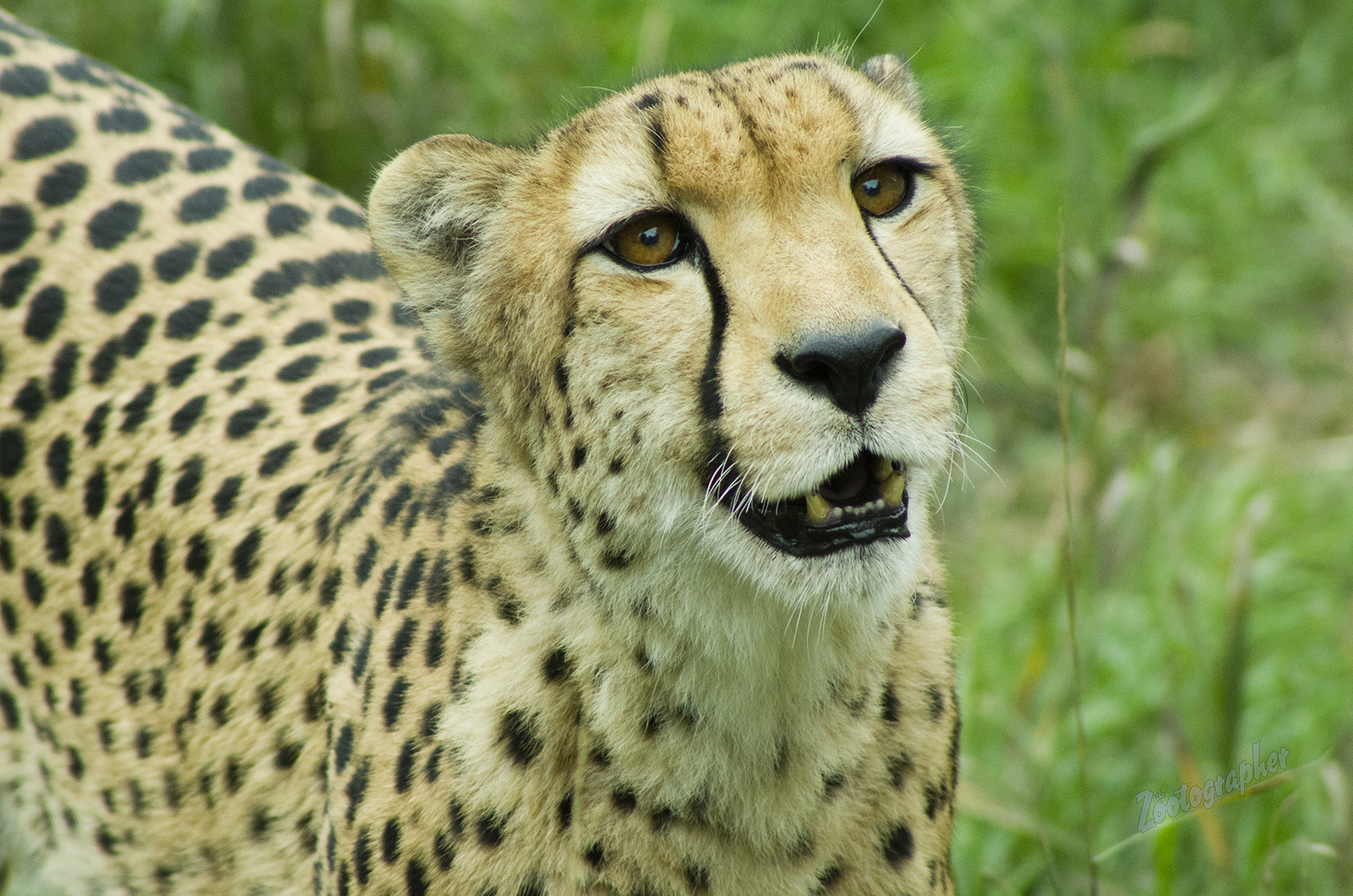
Mojo, Cheetah at the Denver Zoo. 10/2/2018. Pentax k-50, Sigma 400/5.6

Okay, he’d actually only just turned 9 at the time of this picture. But his face feels so much like the look of innocent joy on Steve Carell’s 40-Year Old virgin poster that I couldn’t resist.

When people talk to me about camera gear (which happens a lot when you carry giant lenses around your local zoo), I try to point out two things:

1. Upgrading lenses does more than upgrading cameras.
2. You don’t need the newest highest megapixel biggest cost stuff.

This shot was taken with a 5-year old consumer level DSLR made by a company that most “real” photographers ignore outside of their fond memories of an old k1000 film camera. It was taken with a 3rd party lens from the 1980s. Snap that lens onto a $100 k100d from 15 years ago and you’ve got a perfectly usable Zoo or Wildlife rig for less than $300. Will you have all the modern snappy autofocus and vibration control? Nah. Does that stuff help? Totally. Do you need it? No. Take what you’ve got and make great pictures.

Design a site like this with WordPress.com
Get started