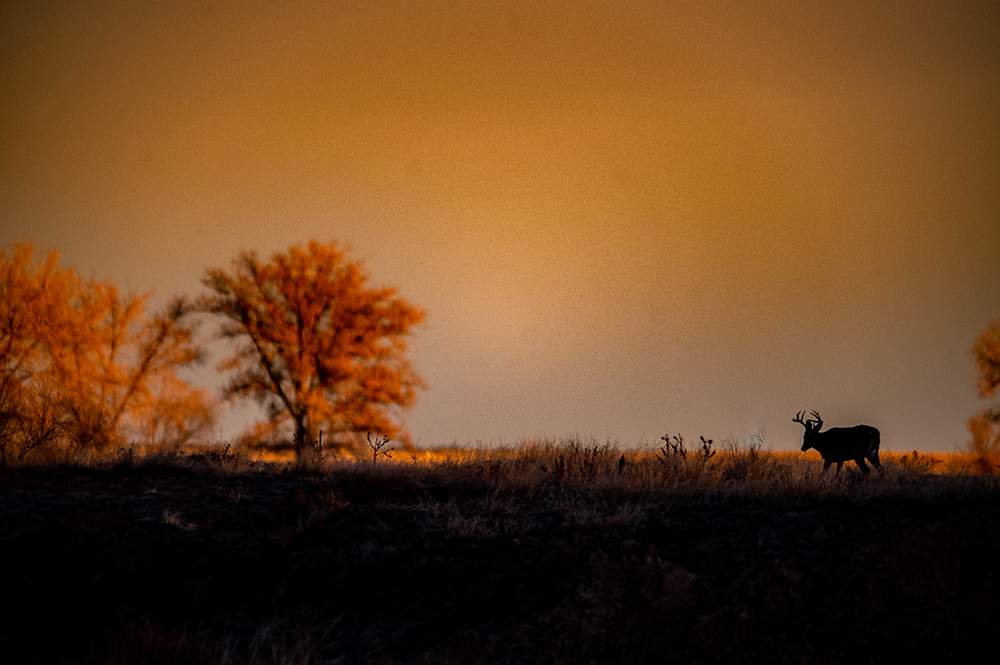
If you’ve been shooting photos for even a brief amount of time, you probably remember the joy of seeing your first shot. Maybe you got a new DSLR or new lens and you remember the joy of the first shot you took with that new bit of equipment. Maybe you met a new subject.
The first shot you ever take is always the best shot you’ve ever taken. Until you make a better one. When I first walked around the Denver Zoo with my camera, I probably came out with 20-30 keepers. Nowadays, I come out with one or two. Your standards get higher with every good shot you take. If you’ve taken the best shot you’ve ever taken of a certain subject, you’re never going to accept anything less for that subject ever again.
The shot above? It’s the first time I’ve had a decent enough subject/background combo to make this kind of silhouette photo. It’s okay. It’s not great. But it’s the best version of this photo that I’ve ever made. I’d like to make a better one in the future. I’ll probably make worse ones, and they’ll probably never see the light of day. But for now, this is the best and my standards just got higher.
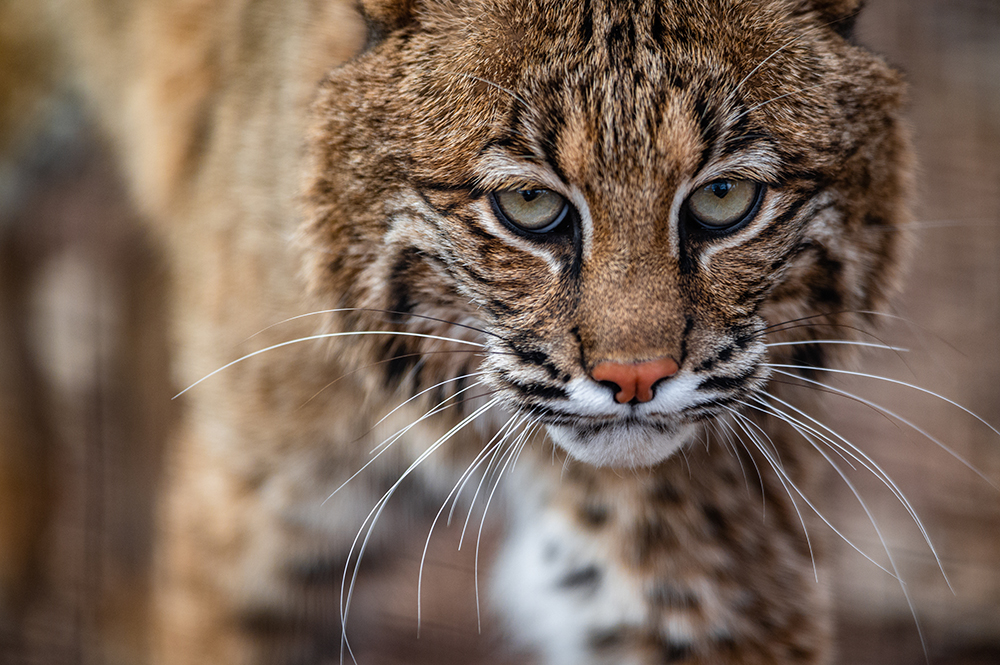
Riverside Discovery Center Bobcat. 11/8/2019. Nikon z6, 400/2.8
One of the first animals you might happen upon when entering Scottsbluff’s Riverside Discovery Center is this beautiful bobcat. Like all cats, every bobcat has their own personality, and on the day I visited this one wanted nothing but attention. It saw me coming, jumped from its perch, and came to rub up on the fence and say hi. Unfortunately, this meant I couldn’t get a good photo. No good angle with the 400, and too close to the barrier for the 16-35 to blur it out.
I tried walking away a few steps and coming back. I tried waiting. But this little guy just wanted to be close to me. It’s moments like that where you put down the camera and just enjoy the experience, enjoy the connection you have with an awesome animal. But then how did the photo above come about?
After I did a couple loops on the main area of the zoo, I started to make my way back to the exit. Unlike with the squirrel monkey picture posted last week, I knew what I was going to get into and I came into it prepared. I wanted to use the 400, but I knew I would only get a couple shots once the cat saw me. I set the aperture to f/4 to up my chances of getting the right bits in focus. I manually rolled the focus distance to minimum because I knew I’d be relatively close and I didn’t want the camera to hunt more than it had to. I shot the habitat from a ways away to ensure I had the exposure set right. I even used the lens as a spotting scope to figure out where the cat was so that I could be ready as I approached.
And approach I did. Quiet as I could be. Camera’s up and ready and FLASH the cat’s off the perch and running toward me. I got four shots off between the perch and the fence. Two were in focus, and one had a decent enough pose.
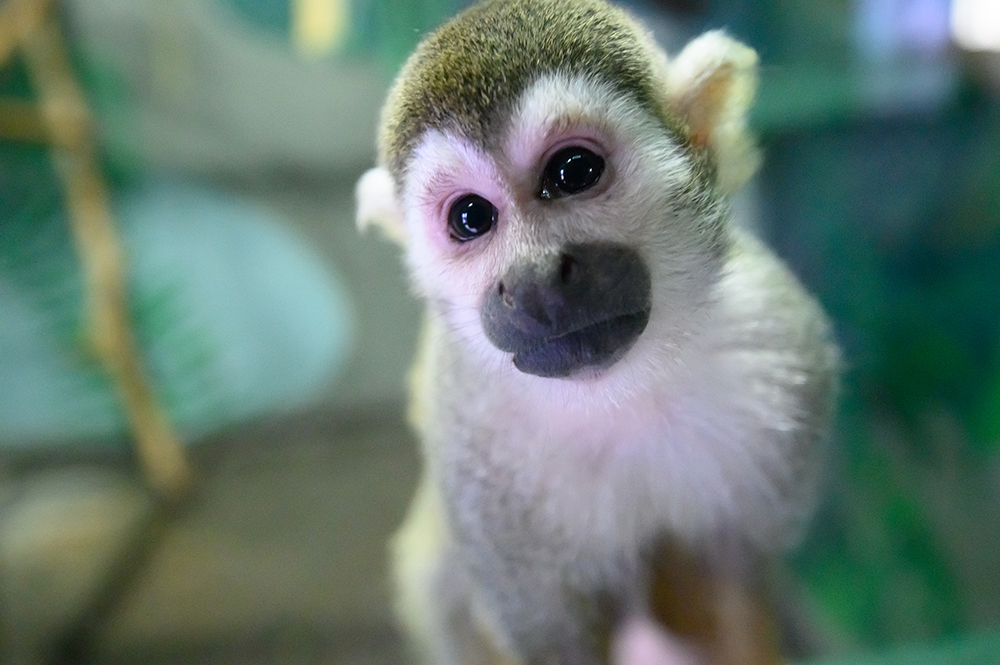
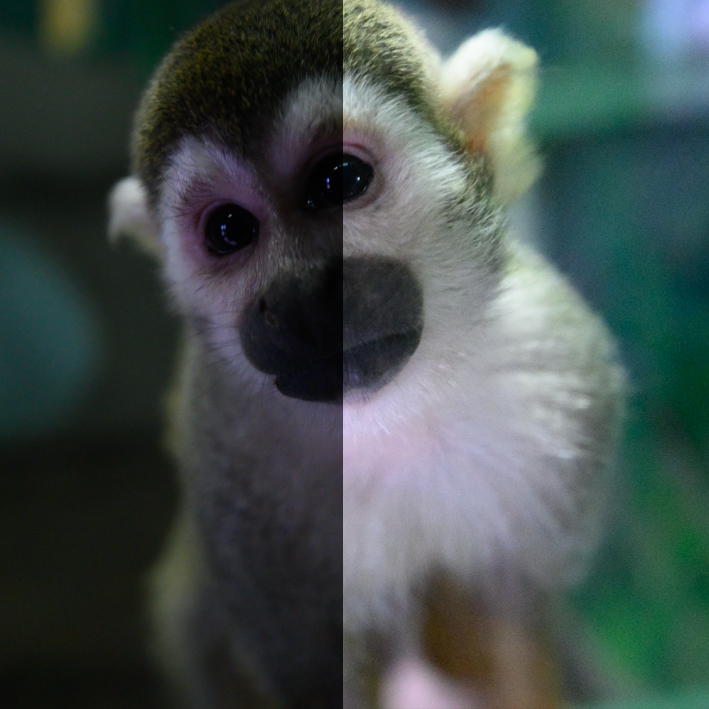
Squirrel Monkey at the Riverside Discovery Center. 11/8/2019. Nikon Z6 16-35/f4
In looking at the list of AZA accredited facilities in the country, I noticed a small one a few hours from me: Riverside Discovery Center in Scottsbluff Nebraska. I did the obvious thing and took a trip up over the weekend.
I had two lenses with me, the 400/2.8 and the 16-35/4. When I went inside the building with these guys in it, I swapped away from the one with the minimum focusing distance of 12 feet and to the slightly more reasonable lens. What I didn’t do was update my shutter speed to match the tighter aperture and indoor lighting. Oops!
It took some serious pushing in lightroom to make a shareable image out of this. How much?
This much.
Thankfully the Z6 files can handle a bit of push. Or in the case of someone making dumb mistakes like me, a lot of push.
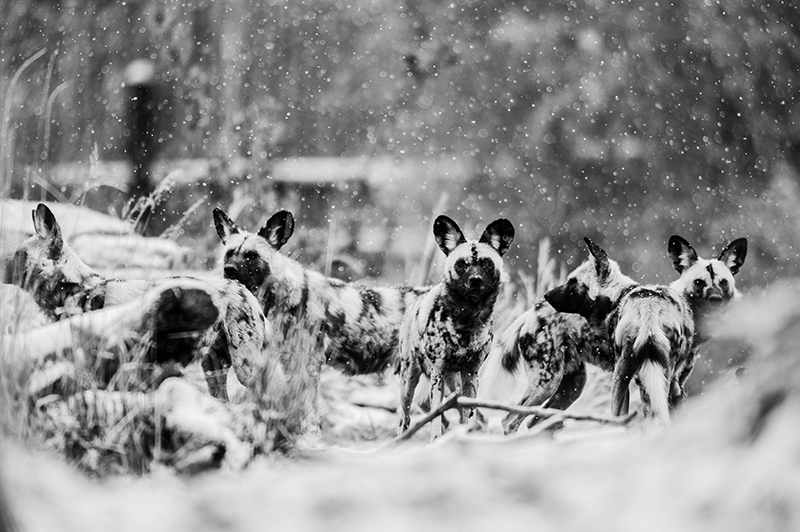
You wouldn’t think it, but most animals from the plains of Africa are pretty okay with cold; it gets awfully cold at night on the Serengeti. So seeing these beautiful guys enjoying the snow isn’t super weird, but it’s a real fun treat.
On this particular day, one of the puppies had found their way into a place they weren’t supposed to be. The habitat is designed with that in mind, and there’s a safe path back to the main part of the habitat for them, but puppies be puppies. And like when yours can’t find the bowl of food you put right in front of it, this particular dog didn’t try the obvious path back to the rest of his family.
After it was reported, one of the care staff went up to a perch on top of the exhibit, shouted out some shift commands, and the operant conditioning took over and our puppy was back with his buds. As they were reuniting, this one in the middle turned and looked right at me. And that connection is what I knew was going to make the shot. A little artsy black and white, a few bucks sent over to Bay Photo Labs, and I’ve got something new for my living room.
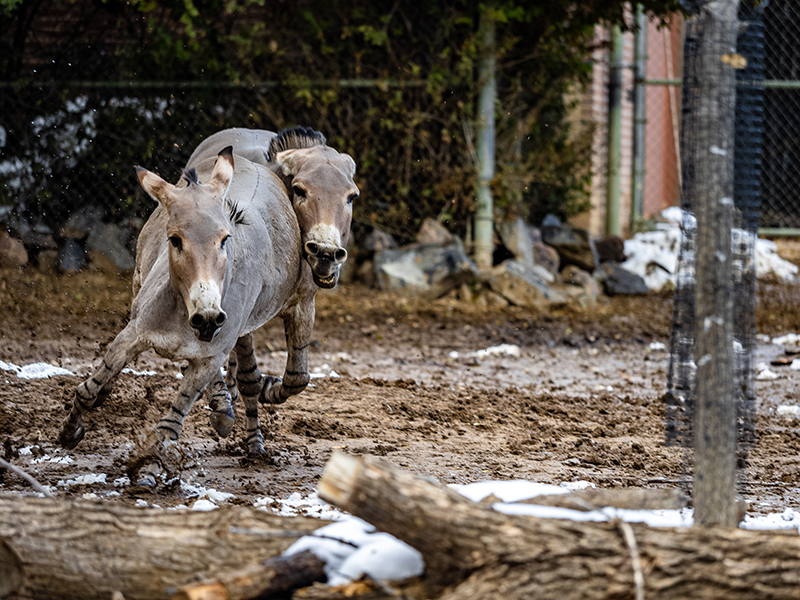
Denver Zoo Somali Wild Asses, 11/1/19, Olympus E-M1x with 40-150/2.8
Olympus is doing something really cool right now. They’re putting on a program that they call Test and Wow, where for literally zero cost, you can try out their micro four thirds system, anything from the entry level stuff to the top of the line E-M1x. Friend of the blog ZooPhotoTips loves his Olympus kit, and it was something with which I’d had zero experience, so I invested the zero dollars, set up an appointment with Mike’s Camera Denver, and gave a shot to their top of the line body and pro tele-zoom.
I took the kit to a few places: the Denver Zoo, the Rocky Mountain Arsenal National Wildlife Refuge, and the Pueblo Zoo. The shot above is from Denver, and it’s what sold me on the attraction ZooPhotoTips has for the system. The autofocus is incredible, the frame rate is insane, and the 40-120 is a beautiful, beautiful lens. The action our Wild Asses were putting on was the perfect arena in which the E-M1x could show off.
And I said on Instagram that day that if I were to ever add a 4/3rds camera to my kit, it’d be because of the shot above.
Unfortunately, it was the rest of the shots that showed me that I probably wouldn’t do that. The format excels in the telephoto range, shooting action, and in bright daylight. And while there’s a little bit of that in the zootography I do, it’s not everything. I was actually confident enough in the system after that first test that I brought it as my primary camera for the trip to Pueblo the next day, and that was something I kind of ended up regretting.
When trying to shoot through mesh or habitat fences, the crop factor of the 4/3rds sensor makes it much more difficult to blur out those unwanted elements. When shooting in less than ideal lighting, the sensor noise gets bad fast. I have a shot on the front page of the website taken with the z6 at ISO 40,000. The E-M1x made me uncomfortable above 1000. I did get some ISO 4000, 5000 shots that were usable, and I believe that with more experience in the system I could make that happen more often, but my old d700 *LIVED* at ISO 3200.
I’ve said before that I can live with more image noise than most. I don’t mind an image that looks like it was shot on Superia 800 instead of a Hasselblad digital back. But those troubles with blurring out background and foregrounds is a killer. The Pueblo Zoo shots on the front of my website aren’t likely to be there for long; I fell in love with the zoo, and fully intend to go back soon with the Tamron 150-600 and the Nikkor 400/2.8 and get some shots that I really truly love.
This is by no means a scientific review, and I have no intent of disparaging Olympus or those that use their products. The camera was an absolute joy to shoot with. When I was walking around Denver with it, the z6 and 400/2.8 felt like a cast iron ball and chain draped over my shoulder. I really do see the attraction. I’m actually a little shocked the system isn’t used MORE often by daylight sports photographers and birders who focus on birds in flight. But for what I do? That small sensor is just too big a handicap 95% of the time. The biggest thing it sold me on – and I know this wasn’t Olympus’s intent- was the Sigma 120-300/2.8, because the Olympus 40-150 (80-300/2.8 full frame equivalent) was an incredibly good focal length for zoo work.
But honestly, the biggest positive I can say? It’s that Olympus is willing to put the gear out there for free test drives. That willingness to expose people to their products, to stand behind them, that gives me a massively good impression of them as a company. And I can really say that if I’m ever travelling somewhere where I can justify dropping some weight at the expense of some photographic versatility, I’d rent the E-M1x in a heartbeat.
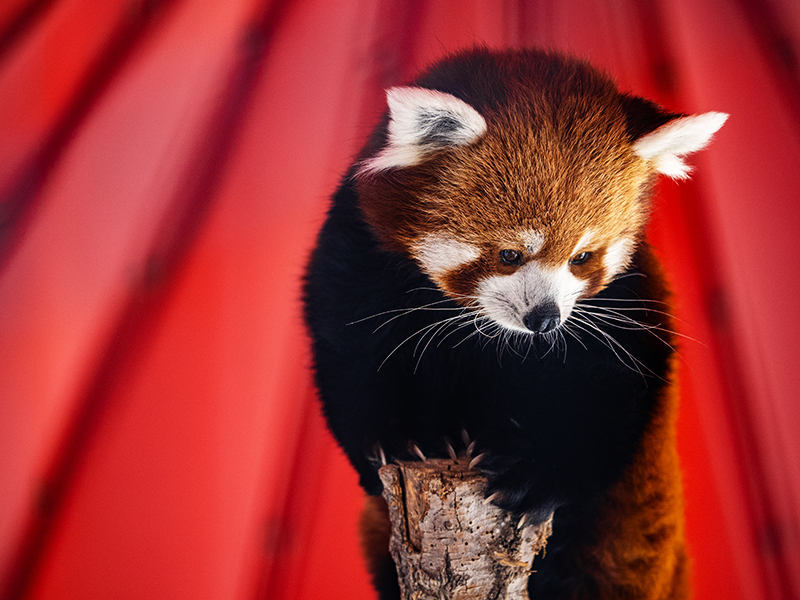
Rupert Jr., one of Pueblo Zoo’s Red Pandas. 11/2/19. Olympus E-M1x with 40-150/2.8
Red Pandas are objectively and scientifically one of the cutest animals in existence. Not a volunteer shift goes by at the Denver Zoo when I have to sadly inform someone that we don’t have them anymore. But you know who does? Pueblo! And what else do they have? An up-close encounter!
So of course I have to do it.
I got to meet all three of their little red firefoxes, Rupert Jr., Princess Priya, and Sleepy Tusa. Part of the encounter is helping with some operant conditioning; without physical contact with their keepers, it’s a lot harder for these guys to get their regular medical exams. So how to train them? By rewarding them with snacks after they allow you to feel their backs. In other words, by feeding and petting them!
If you have any normal level of love for these amazing creatures, and you have any opportunity at all to run through Pueblo, CO, take a look at doing this up-close encounter. The staff are amazing, and the pandas are as incredible as you would imagine. Plus, every up-close Red Panda encounter helps support the Red Panda Network and their mission of conservation of Red Pandas in the wild.
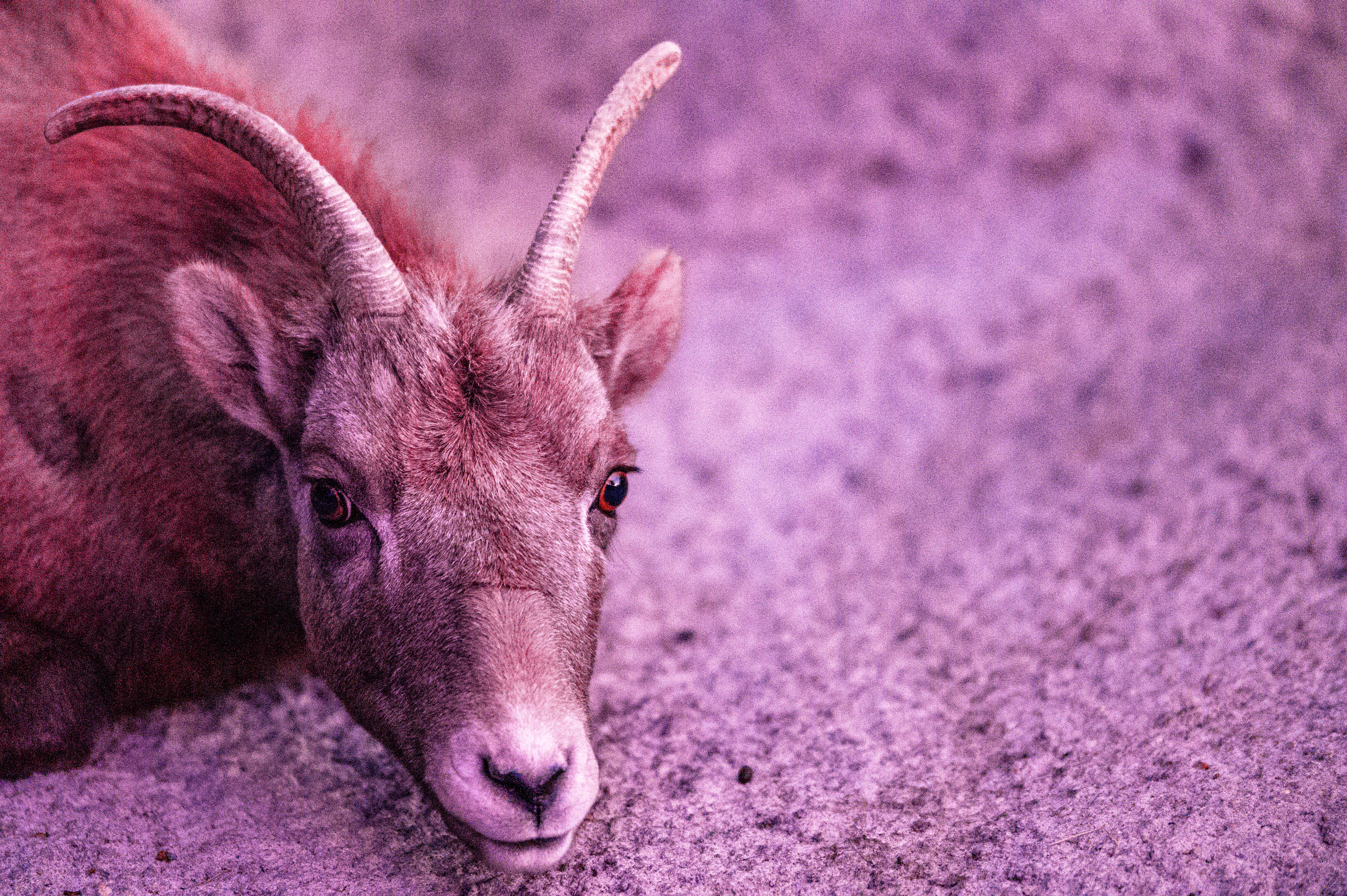
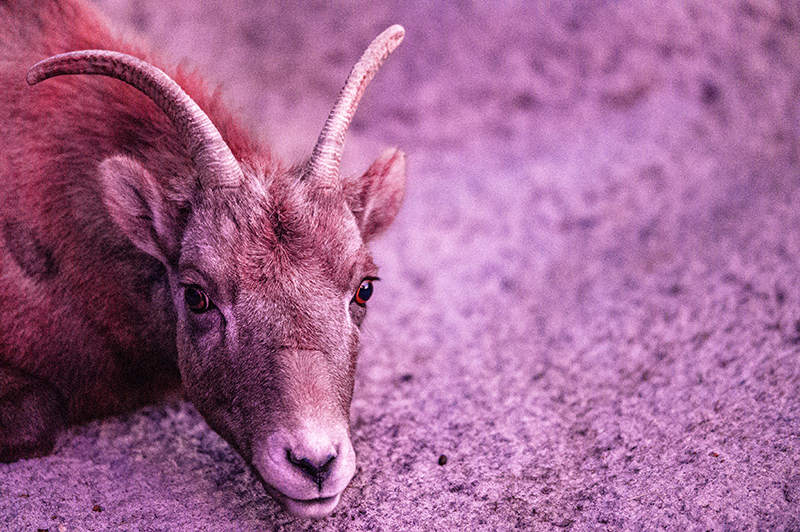
Rocky Mountain Big Horn Sheep at the Denver Zoo. 10/14/2019. Nikon z6, Nikon 400/2.8d
What was the power level involved in this shot? Well it wasn’t just over 9000, it was over 400% of that. This shot is brought to you by an early morning volunteer shift and the Z6’s ability to shoot incredibly usable images at ISO 40,000.
Is it clean? No. Not even close. There’s noise in there and no amount of reduction is going to get rid of it. Is it bad? Hell no. Actually, it reminds me a lot of Fuji Superia 1600, except it’s actually got some resolution and sharpness. And while I know it’s not common in the digital age, I had no problem shooting paid gigs with Superia back in the day.
Furthermore, at any kind of normal viewing resolution, you’d really never know how noisy it is. Scaled down to 800px on the long edge up above, you probably didn’t even know it was a high ISO image. Printed at 16×24? Well, I haven’t done it with this particular image, but I guarantee there’d be no noise complaints on that end either.
That being said, this is a very modern sensor doing some very modern things. My d700 lived at ISO 1600, and I wouldn’t be afraid to push to 6400. But 12k? That was gnarly, and not in a good way. Your Olympus micro 4/3rds camera? Yeah. Not a chance.
So how does it end up looking this good? Two things:
The light is good. Actually, the light is great. That’s the whole reason I lug the 400/2.8 out on my morning volunteer shifts. The morning light in the mile high city is about as good as it gets. If I was shooting at ISO 40,000 in hopes of getting 1/20th of a second or something in a near black situation with a dark background, yeah it’d be garbage.
The editing. In that close up, you’re going to see a lot of luminance noise. What you don’t see a lot of is chroma, or color, noise. That’s because in lightroom you can – with one move of a slider, turn all that ugly digital color noise into regular luminance noise. Then? Don’t even touch the luminance noise slider. The instant you do, you lose the character, you lose the detail, and it all becomes a melty plastic mess.
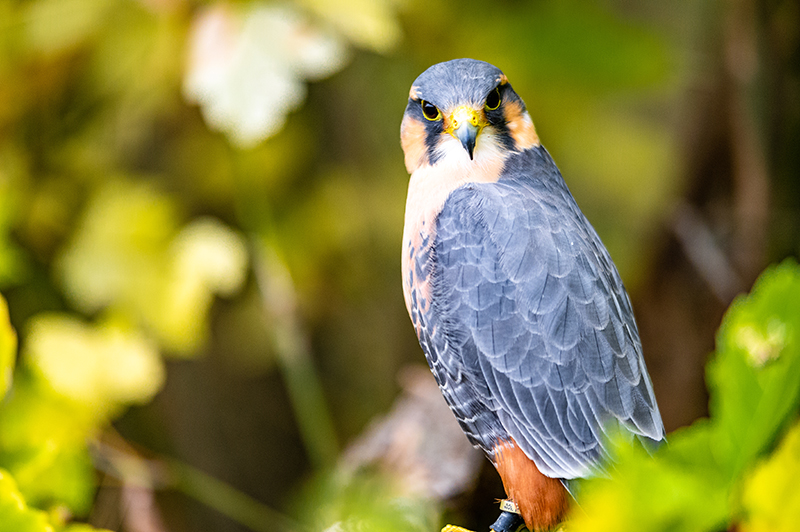
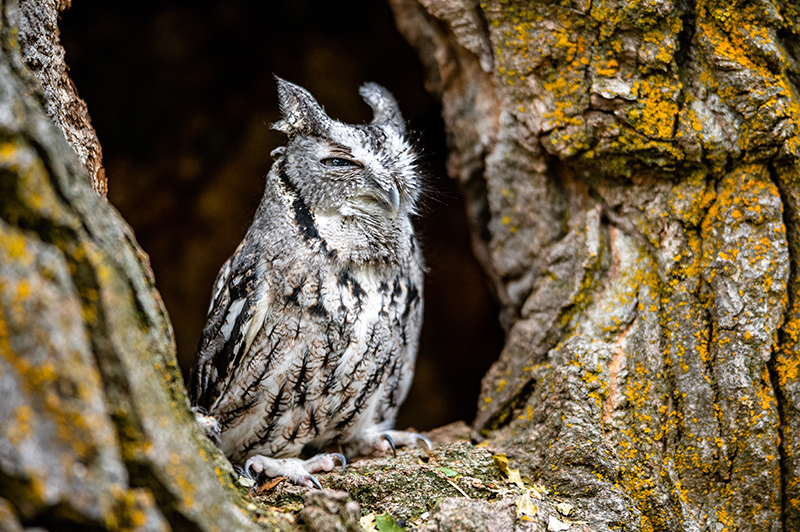
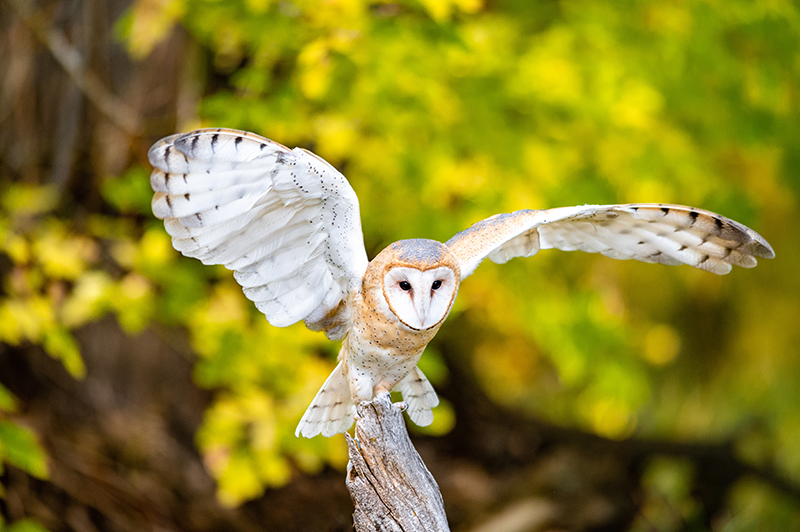
Last Saturday, Kin and his raptor conservation center at Hawk Quest partnered again with Mike’s Camera to offer up some beautiful photo opportunities with some incredible birds.
The standout in my mind was the Aplomado Falcon; this is a bird that wasn’t even on my radar. But holy crap is it one beautiful bird. I commented over in the instagram that it was likely one of the most beautiful animals I’ve ever had the chance to photograph, and I stand by that even now.
Just like last time with the owls-only event, all these HawkQuest photos are available for purchase. And, just like last time, 20% of all purchases of HawkQuest birds will go directly to Kin’s conservation and rehabilitation efforts.
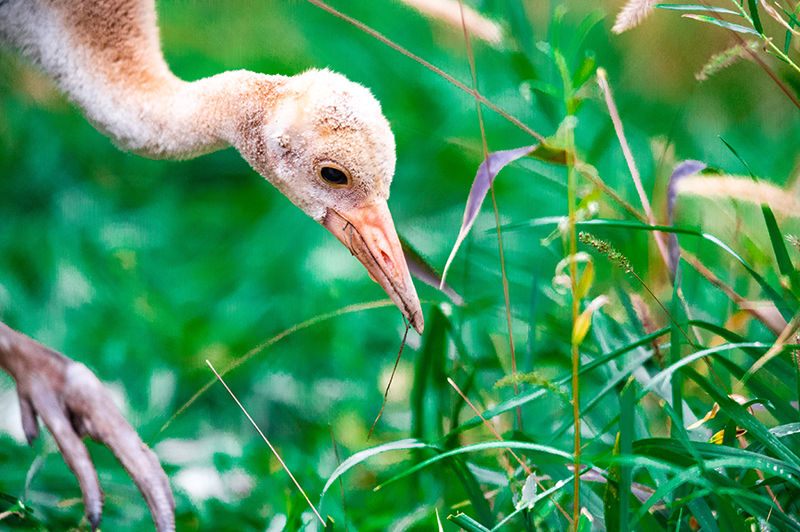
Miley Sarus, baby Sarus Crane at the Denver Zoo. 10/1/209. Nikon z6, 400/2.8 with 1.4x TC
Remember that scene in the original (or, you know, the only) Jurassic Park movie where the baby raptor pokes its head out of its shell and it’s the cutest thing ever? These guys are pretty close to that level. They’re also pretty close to the size that velociraptors actually were.
Little Miley Sarus here is about 4 or 5 weeks old. You can see mom’s leg there in the foreground for a little bit of scale. Miley, like most birds, is growing exceptionally fast. Two weeks ago she was about half as tall as she is now. She still hasn’t developed the beautiful red and white feathers the species is known for, but holy crap is she a cutie anyway.
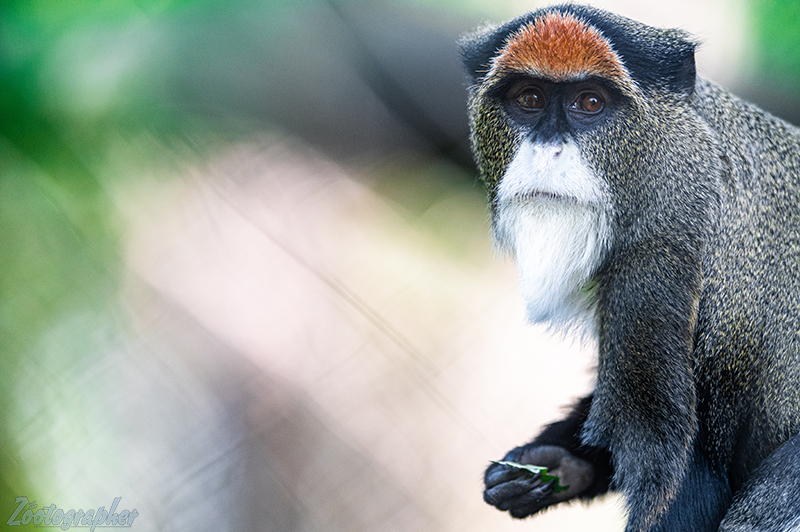
DeBrazza’s Monkey at Denver Zoo. 9/3/2019. Nikon z6, 400/2.8
I’ve seen some big ol’ softboxes in my time. 72″ octoboxes, 80″ stripboxes. But none of them hold a candle to an overcast sky. A nice moderate layer of clouds that takes the sun’s harsh, directed 120,000 lux and turns it into a beautiful, evenly distributed 10,000 lux.
DeBrazza’s monkeys, despite being incredibly handsome, have a very strong brow and cheek. This means that under direct sunlight, you’re never going to have enough dynamic range in your camera to get good light on the eyes without blowing the rest of him into the nuclear range. Once you get god’s softbox up and running though? Wow, are they some pretty monkeys.
 The Zootographer