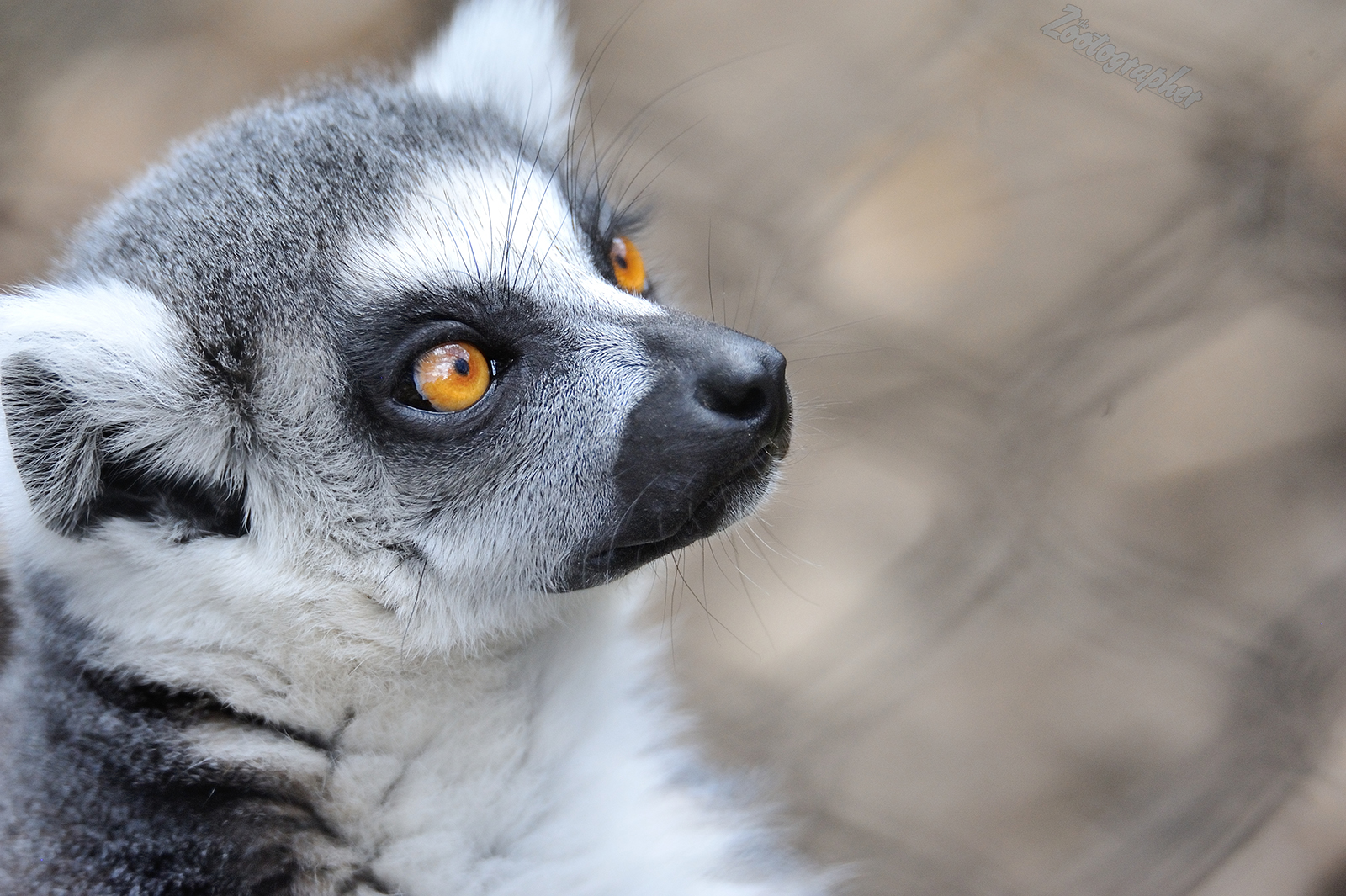
Our local Mike’s Camera had an event at the Denver Zoo a few weeks ago. You show up, hand over your driver’s license, and get to play with their collection of cameras and lenses for the entire day. Anything from the latest point and shoot to this beautiful $13,000 monstrosity. My main goal was to test drive some lenses I had actually been considering adding to my kit this year, most notably the Nikon 105/2.8 Macro. But, come the end of the day, I did what everyone else did and asked if they had something big I could play with.
The Tamron rep handed over their 2nd generation 150-600mm superzoom. This lens wasn’t on my radar; The last time I had looked at a Tamron lens was about 15 years ago, buying a 70-300 step-up lens for my Pentax k20d. My “zoo lens” at the time was a 30 year old Sigma 400/5.6 prime, which – despite its atrociously loud autofocus drive – did great work. I didn’t think I had a need for something newer.
The shot of the lemur above is the third frame I captured after putting on the Tamron. I chimped the rear LCD after shooting that burst and immediately thought, even on the 11 year old LCD, “This is the prettiest picture I’ve ever made…”. My second thought: “I guess I need to find some money…”.
A week later, I was in Mike’s Camera Denver warming up a credit card. I stand by the belief that there’s nothing wrong with old lenses. The science of optics is ancient. The glass in that massive Nikon lens linked above is not all that different from the glass in the kit lens that came with your k1000 film SLR fifty years ago. But the advancements in autofocus technology, vibration reduction, and chemical lens coatings are something I’d been ignoring. It took this Lemur to show me that.
All that being said, you don’t have to have the newest gear. This was a conflux of getting to play with something new at a time that I had some spare space on the credit cards. This modern lens is still paired with an 11 year old d700. If you want to go out and make some animal photos, go out and make some animal photos. Gear is not going to stop you. At some point in the near future, I’ll probably do some comparisons of various price-pointed lenses. Spoiler alert, here’s the outcome: If you can afford the more expensive one, get the more expensive one. If you can’t, get the cheap one and make great photos.
 The Zootographer